Source Petroleum Stainless Steel Flange for Oil Gas Refining
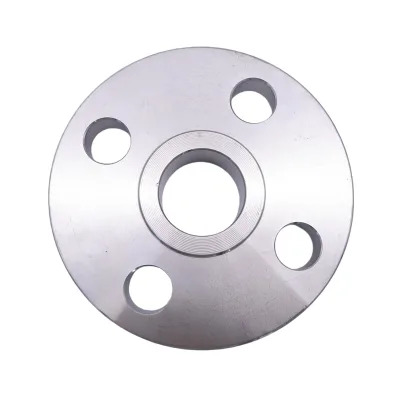
Find and compare 30 petroleum stainless steel flange options from Chinese manufacturers. Evaluate materials like carbon steel and stainless steel, standards such as ANSI and DIN, and customization capabilities for industrial piping systems.
Key considerations
Products List




Comprehensive Sourcing Guide
Petroleum Stainless Steel Flange Sourcing Guide
Sourcing flanges for petroleum applications requires a rigorous approach that balances material integrity with precise mechanical performance. Stainless steel flanges are critical components in fluid transport systems, providing secure, leak-proof connections between pipes, valves, pumps, and other equipment. In the high-pressure and corrosive environments typical of the oil and gas industry, the integrity of these connections is paramount to operational safety and environmental compliance. Buyers must navigate a complex landscape of international standards, material grades, and manufacturing processes to ensure that the selected components meet the specific demands of their infrastructure.
The procurement process for these industrial fittings involves more than just selecting a price point; it requires a deep understanding of technical specifications and supplier capabilities. The market offers a wide variety of options, ranging from standard carbon steel to specialized stainless steel alloys, each with distinct properties regarding corrosion resistance, tensile strength, and temperature tolerance. This guide provides a structured framework for evaluating suppliers, verifying technical compliance, and managing commercial risks, ensuring that procurement teams can make informed decisions that align with long-term operational goals and safety standards.
Product Scope and Observed Listing Signals
The current market landscape for petroleum-grade flanges reveals a diverse range of product listings that cater to varying industrial needs. Observed data indicates a significant price range, typically spanning from low-cost entry-level items to high-specification engineered components, reflecting the variability in material quality and manufacturing complexity. Minimum order quantities (MOQs) also vary widely, allowing both large-scale infrastructure projects and smaller maintenance operations to source appropriate volumes. Buyers should note that while some listings offer standardized products, many suppliers emphasize customization capabilities, suggesting that off-the-shelf solutions may not always meet the precise dimensional or material requirements of specific petroleum applications.
A critical observation in the current market is the prevalence of multi-standard compliance claims. Suppliers frequently list adherence to a broad spectrum of international standards, including GOST, GB, DIN, ANSI, BSW, and JIS. This indicates that many manufacturers are equipped to produce flanges for global markets, but it also necessitates careful verification by the buyer. The presence of keywords such as "Threaded Flange" alongside "Welding Flange" suggests that suppliers often offer multiple connection types, yet the specific application dictates the appropriate choice. Buyers must distinguish between general-purpose listings and those specifically engineered for the harsh conditions of petroleum processing, ensuring that the observed product attributes align with their technical requirements.
Technical Specifications to Verify
Material selection is the primary technical consideration when sourcing stainless steel flanges for petroleum services. The supplied facts indicate that carbon steel and stainless steel are common materials, but the specific grade of stainless steel must be verified against the chemical composition and mechanical properties required for the intended service environment. Factors such as resistance to sulfide stress cracking, chloride-induced corrosion, and high-temperature oxidation are critical. Buyers should request detailed material test reports (MTRs) that confirm the alloy composition, ensuring that the flange meets the necessary standards for pressure containment and chemical resistance. The manufacturing method, often cited as forging, is generally preferred for high-integrity applications due to the improved grain structure and mechanical properties it provides compared to casting.
Dimensional accuracy and connection type are equally vital technical parameters that must be rigorously verified. The observed data highlights various connection methods, including welding and flanged connections, with sealing surfaces often specified as Flat Face (FF). However, the specific face type must match the mating equipment to prevent leaks. Tolerance levels are another key area of scrutiny; while some listings claim machining tolerances up to +/- 0.1mm, others state that tolerances depend on the applicable standard. Buyers must ensure that the flange dimensions, including outer diameter, bolt hole spacing, and thickness, conform to the relevant standard, such as ANSI B16.5 or EN1092-1, to ensure proper fit and function. The structure of the flange, whether round or otherwise, must also be confirmed to match the piping design.
Compliance and Safety Documentation
Compliance with international standards is non-negotiable in the petroleum industry, where failure can lead to catastrophic consequences. The observed listings reference a comprehensive array of standards, including American (ANSI B16.5, ASME B16.47), European (EN1092-1), British (BS4504, BS10), Japanese (JIS B2220), Korean (KS B1503), and Australian (AS2129) standards. Buyers must verify that the supplier can provide documentation proving compliance with the specific standard required by their project specifications. It is essential to confirm that the flange is manufactured in accordance with the correct version of the standard, as revisions can introduce changes in dimensions or testing requirements. The presence of ISO 7005-1 certification is a positive indicator, but it should be cross-referenced with the specific project requirements to ensure full alignment.
Safety documentation extends beyond dimensional compliance to include material traceability and quality assurance records. Buyers should insist on comprehensive Material Test Reports (MTRs) that detail the chemical analysis and mechanical properties of the stainless steel used. These documents should trace the material back to the original mill, ensuring that the alloy composition matches the specified grade. Additionally, suppliers should provide certificates of conformity and inspection reports that confirm the flanges have undergone necessary testing, such as hydrostatic pressure tests or non-destructive examination (NDE). The ability to provide these documents is a strong indicator of a supplier’s commitment to quality and safety, reducing the risk of receiving non-compliant or substandard components.
Cost Drivers and Commercial Terms
The cost of petroleum stainless steel flanges is influenced by several key factors, including material prices, manufacturing complexity, and order volume. Stainless steel alloys are generally more expensive than carbon steel due to the cost of alloying elements like chromium and nickel. The manufacturing process, particularly forging, adds to the cost but ensures higher quality and durability. Buyers should be aware that customization, such as special flange designs according to drawings or specific tolerance requirements, can significantly increase the unit price. Additionally, the volume of the order plays a crucial role; larger quantities often benefit from economies of scale, while smaller orders may incur higher per-unit costs due to setup and handling fees.
Commercial terms and logistics also impact the total cost of ownership. The observed data indicates that suppliers often offer flexible business terms, including FOB, CIF, and CFR, allowing buyers to choose the most suitable shipping arrangement based on their supply chain strategy. Delivery times are noted as variable, depending on the situation, which underscores the importance of early planning and clear communication with suppliers. Packaging is another consideration; options range from standard seaworthy packing to customized wooden cases or plywood boxes, which can affect shipping costs and protection during transit. Buyers should negotiate clear terms regarding payment, delivery schedules, and liability for damages to mitigate financial risks.
Supplier Qualification and Quality Control
Evaluating supplier qualifications is a critical step in ensuring the reliability of the supply chain. Buyers should assess the supplier’s manufacturing capabilities, including their ability to perform forging, casting, cutting, and rolling processes. The observed data suggests that many suppliers offer customization services, which indicates a level of technical flexibility. However, buyers must verify that the supplier has the necessary equipment and expertise to produce flanges to the required specifications. It is also important to check the supplier’s track record in the petroleum industry, looking for evidence of successful deliveries and positive customer feedback. Suppliers that accept drawings for special flanges demonstrate a commitment to meeting specific customer needs, which is a valuable attribute for complex projects.
Quality control processes are essential for maintaining consistency and reliability in flange production. Buyers should inquire about the supplier’s quality management system, including their procedures for incoming material inspection, in-process control, and final product testing. The ability to provide customized packaging and adhere to specific standards is a good indicator of a robust quality system. Additionally, buyers should consider the supplier’s willingness to provide samples for evaluation, as this allows for a direct assessment of product quality before committing to a large order. The observed advantage of "High Quality and Low Factory Price" should be treated with caution; buyers must verify that low prices do not come at the expense of material integrity or manufacturing standards.
Long-Term Procurement Checks
Establishing long-term relationships with reliable suppliers is crucial for maintaining supply chain stability and cost efficiency. Buyers should conduct periodic audits of their suppliers to ensure ongoing compliance with quality standards and safety regulations. This includes reviewing updated material test reports, inspection records, and any changes in the supplier’s manufacturing processes. Regular communication with suppliers can help identify potential issues early, such as delays in delivery or changes in material availability. Buyers should also stay informed about updates to international standards and industry regulations, ensuring that their procurement practices remain aligned with current requirements.
Continuous improvement in the procurement process involves analyzing performance metrics and feedback from end-users. Buyers should track metrics such as on-time delivery rates, defect rates, and supplier responsiveness to identify areas for improvement. Building a diverse supplier base can mitigate risks associated with single-source dependencies, providing flexibility in case of disruptions. Additionally, buyers should consider the environmental and social responsibility practices of their suppliers, as these factors are increasingly important in the petroleum industry. By maintaining a proactive approach to supplier management, buyers can ensure a steady supply of high-quality flanges that support the safe and efficient operation of their petroleum infrastructure.
FAQs
What standards do petroleum stainless steel flanges meet?
These flanges meet multiple international standards including GOST, GB, DIN, ANSI, BSW, and JIS. Specific American standards like ANSI B16.5 and ASME B16.47 are also available. European and British standards such as En1092-1 and BS4504 are supported for various applications.
Can I request custom specifications for these flanges?
Yes, customization is available according to specific customer drawings. The manufacturer accepts special flange requests and offers standard specifications or customized options. This allows buyers to obtain exact dimensions and features required for their unique industrial projects.
How are these flanges manufactured and what materials are used?
The flanges are produced using forging, casting, cutting, and rolling processes. Available materials include carbon steel and stainless steel. This manufacturing approach ensures high quality and structural integrity suitable for demanding petroleum industry applications and various pressure conditions.
What packaging methods are used for shipping these flanges?
Standard packaging includes plywood boxes, pallets, wooden cases, and bundles. Seaworthy packing is also available to ensure safe transport. Customized packaging options can be arranged to meet specific logistical requirements or to protect the flanges during long-distance international shipping.
Which machining tolerances are applied to these flanges?
Machining tolerances can reach up to plus or minus 0.1mm based on customer drawings. General tolerances depend on the specific standard applied to the product. This precision ensures that the flanges fit correctly within piping systems and meet strict engineering requirements.
What delivery terms and freight methods are available?
Business terms include FOB, CIF, and CFR for flexible trade arrangements. Freight can be shipped via air or sea depending on urgency and volume. Delivery time depends on the specific situation and order requirements, ensuring timely supply for global markets.